At Practice Plus Group, private knee surgery has an average waiting time of just 4–6 weeks. Patients receive expert, personalised care across a full range of knee treatments — from injections to replacements. These are designed to relieve pain, restore mobility, and improve quality of life.
Check if we accept your insurer
How to get started
1
Get referred – Ask your GP to refer you to us.
2
Confirm cover – Contact your insurer to check your cover.
3
Get authorisation – Ask your insurer for a code.
4
Get booked in – Contact us to book your consultation.
In comparison, current NHS waiting times for knee surgery are typically between 6-12 months, but some may be longer.1 NHS Waiting times vary depending on the following factors:
hospital location
demand for orthopaedic care being higher than other specialities
prioritisation of urgent case over scheduled operations
system pressures creating long waiting lists.
What is knee surgery?
Knee surgery is a medical procedure to repair or replace parts of the knee joint, relieve pain, improve mobility, or fix damage caused by conditions or injury. There are lots of different types of knee surgery. These range from minimally invasive procedures to more extensive surgeries. The goal is to help patients regain function and reduce pain.
Anatomy overview
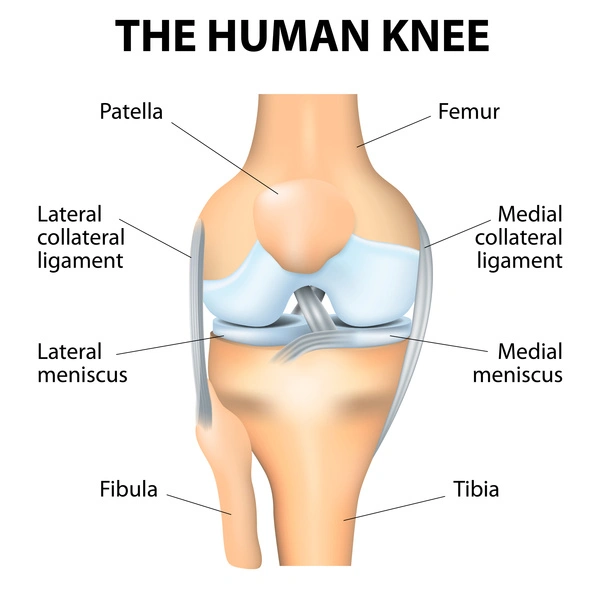
The knee joint is formed by:
Femur (thigh bone)
Tibia (shin bone)
Patella (kneecap)
Smooth cartilage helps the joint glide, while ligaments (including the ACL) stabilise movement. Damage can occur gradually (arthritis, wear-and-tear) or suddenly (sports injury). When pain and stiffness persist despite non-surgical care, knee surgery may be recommended.
Who is it for?
Knee surgery is usually for people who suffer from significant knee pain or mobility issues that haven't improved with more conservative treatments such as medication, physiotherapy or lifestyle changes. It’s often recommended for those with severe arthritis, knee injuries or wear-and-tear damage that limits daily activities and reduces quality of life.
The majority of patients are aged between 50–80 with the most common surgeries being partial or total knee replacement. Younger patients (between 20-40) most commonly incur injuries related to sport (e.g. ACL and meniscus tears).
Risk groups
Your consultant will consider factors that can affect surgical risk and recovery, such as:
Higher body weight (can increase joint load and recovery demands)
Diabetes or other long-term conditions
Smoking (linked to slower healing and higher complication risk)
If knee pain is affecting your ability to walk, exercise, or even rest comfortably, knee surgery might be a beneficial option to help restore function and relieve pain. Talk to your doctor or healthcare provider about your options.
Red flag guidance
Seek urgent medical advice if you have:
Sudden severe pain with swelling
Inability to straighten or bend the knee
Knee locking in a fixed position
Signs of infection such as fever, warmth and redness around the knee
And after surgery, seek urgent help if you develop:
Calf pain, swelling or redness (possible blood clot)
Sudden chest pain or difficulty breathing (possible pulmonary embolism)
Fever, wound redness or discharge (possible infection)
If your doctor has recommended knee surgery, it's time to explore the knee operation types available.
Take a look below at the different types of knee surgery available at Practice Plus Group that could help get you back on your feet.
Total knee replacement surgery
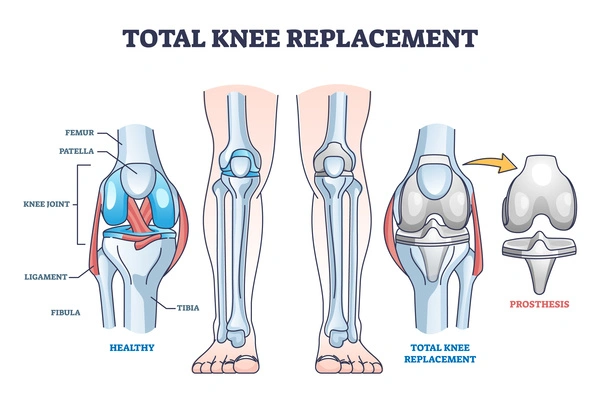
Total knee replacement surgery is a common procedure that sees damaged or diseased parts of the knee joint replaced by artificial counterparts. This is to restore motion and reduce pain.
Who it's for: Total knee replacement operations are for people whose knees are severely damaged by rheumatoid arthritis or sporting injuries. It’s suitable for those that find it difficult to perform daily activities like walking or climbing stairs or those that suffer from pain and stiffness.
How it works: During the procedure, the damaged cartilage is removed and replaced with metal implants. These are often cemented into the bone. A plastic spacer is then inserted between the metal components to create a smooth surface.
How long it takes: Between 1-2 hours.
Anaesthesia: You’ll usually have either a general anaesthetic (asleep) or spinal anaesthetic (numb from the waist down). This will be discussed with you by your anaesthetist.
Hospital stay: Many patients go home the same day or shortly after, depending on the procedure and your recovery. Practice Plus Group follows the Enhanced Recovery Pathway (ERP) to support early mobilisation.
Where it's available: Private knee replacement surgery is available through Practice Plus Group. The procedure is also available on the NHS but waiting times are likely to be much longer.
Recovery time: Most patients will see a significant improvement in their knee function by 12 weeks post-surgery. A full recovery can take much longer, sometimes up to 18 months.
How long do knee replacements last?: NHS PROMs shows most people report improvement, and registry data suggests knee replacements can be long lasting. NHS PROMs (2023/24) reports 73.5% felt “much better” and 15.9% “a little better” after knee replacement.3 NJR reporting indicates long-term survivorship expectations for total knee replacements. NIHR evidence summary notes more than 80% of total knee replacements can last 25 years.4
Partial knee replacement surgery involves replacing only the diseased or damaged joint surfaces in the knee with metal and plastic components.
Who it's for: Partial knee replacement surgery may be suitable for some people suffering from osteoarthritis that is restricted to one part of the knee.
How it works: Although similar to a total knee replacement, this procedure doesn’t interfere with healthy cartilage or bone. Instead, the implant only replaces damaged parts of the knee.
Procedure duration: Often between 1 - 1.30 hours depending on complexity and technique.
Hospital stay: Many patients can return home the same day or after a short hospital stay, depending on mobility and clinical advice.
Where it's available: Partial knee replacement surgery is available through Practice Plus Group. The procedure is also available on the NHS but waiting times are likely to be much longer.
Recovery time: The recovery period typically lasts around 3-6 weeks but may take longer.
Anterior cruciate ligament (ACL) reconstruction
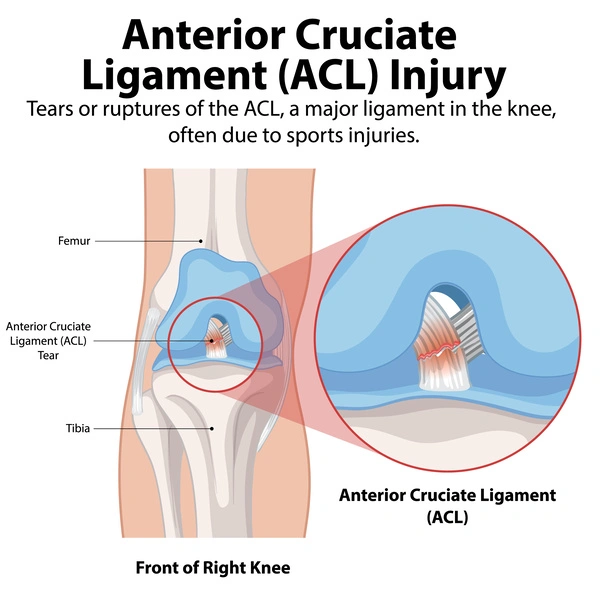
ACL knee reconstruction surgery is a procedure to remove a torn ligament from the knee. A tissue graft is then inserted. The surgery is performed via keyhole or minimally invasive surgery to reduce scarring and bruising.
Who it's for: This surgery is available to everyone but ACL injuries are most common in sportspeople. Basketball, football and tennis players are among those most at risk from an ACL injury due to the stop-start nature of their sport.
How it works: ACL reconstruction surgery is usually performed under general anaesthetic. Once you’re under anaesthetic, your surgeon will perform most of the surgery using an arthroscope. The injured ACL tendon is reconstructed with tissue from elsewhere in your body. These are most often taken from either your hamstring or patella tendon.
How long it takes: Around 1 hour and 30 minutes.
Where it's available: ACL reconstruction is available through the NHS or private healthcare. The statutory waiting time on the NHS is currently 18 weeks.
Recovery snapshot: Many patients return to everyday activities around 6 weeks after the operation (this can vary), and structured physiotherapy is essential for restoring strength and stability.
Knee arthroscopy surgery is used to investigate knee problems. These can range from inflammation and injury to repairing damaged tissue or removing a Baker’s Cyst. An arthroscope – a telescope on a long, thin cord – is inserted through small cuts in the skin. Arthroscopies enable the patient to recover faster from surgery.
Who it's for: If you suffer from pain, stiffness, swelling or instability in your knee, an arthroscopy may be recommended. Knee injuries are usually age-related, due to sports or accidents (falling over, for example).
How it works: Knee arthroscopy (sometimes referred to as keyhole surgery) allows your surgeon to look inside your knee. They can then diagnose and treat with the required surgery.
How long it takes: Between 30 minutes to 1 hour.
Where it's available: Knee arthroscopy is available privately and on the NHS. The current NHS waiting time is around 18 weeks. Private knee arthroscopy is available via Practice Plus Group. The waiting time for surgery is around two to four weeks.
Arthroscopic knee surgery recovery time: The recovery time for arthroscopic knee surgery depends on your age and adherence to post-op knee exercises. An operated knee can take up to 2 years to fully heal.
This surgical procedure involves replacing a patient’s artificial knee joint with a new one.
Who it's for: Knee revision surgery is for people who have already had a knee replacement. It is usually necessary when their original implant has failed. Injury, wear and tear, loosening and infection are among the most common indications.
How it works: During surgery, the old implant is removed and replaced with specialised knee revision implants.
How long it takes: The surgery takes longer than a primary knee replacement procedure. Some surgeries can last for an hour, while other patients can be in theatre for a few hours.
Where it's available: Knee revision surgery is available both privately and with the NHS. The current NHS waiting time is around 18 weeks but can be longer depending on location. Private knee revision surgery is available via Practice Plus Group. The waiting time for surgery is around 2-4 weeks.
Recovery time: This depends on the complexity of the knee revision you received.
The meniscus cartilages stabilise and cushion the knee joint. Injury to the meniscus is a very common occurrence and can be sports or age-related.
Who it's for: Meniscus knee surgery is for patients that have suffered a torn meniscus cartilage that has resulted in pain and instability of the knee. When a knee is unstable, it may give way or lock in a bent position.
How it works: This arthroscopic procedure may require trimming or full repair. This decision is based on the type and location of the tear. The procedure aims to reduce pain, improve mobility, and get you back enjoying everyday life.
How long it takes: Around 1 hour.
Where it's available: Meniscus knee surgery repair is available privately and on the NHS.
Recovery time: Typically a few weeks but this can vary from patient-to-patient.
In this surgical procedure, tight structures on the outer part of the kneecap are released. This eases knee pain caused by the kneecap being pulled away from its normal alignment.
Who it's for: Lateral release is an arthroscopic procedure that realigns the kneecap. This is most often due to kneecap (patella) tilt where the kneecap is ‘tilted’ towards the outside of the leg.
How it works: Lateral patella tilt is when the kneecap is not sitting properly in the groove at the bottom of the thigh bone (femoral groove) and is tilted towards the outside (lateral) of the knee. A lateral release procedure involves your surgeon cutting through the tissue pulling the kneecap out of position. This allows the patella to sit properly within its groove. The incision is then closed. You may be given special supports to stop the kneecap sliding out of position.
Procedure duration and hospital stay: The procedure typically last under an hour and is commonly done as day surgery, depending on your individual plan.
Where it's available: Lateral release surgery is available privately and on the NHS.
Patella resurfacing
A surgical procedure to replace the joint surface of the patella. It is usually performed as part of a total knee replacement but may be done in isolation if the joint surface damage is confined to the patella.
Who it's for: It’s important to note that patella resurfacing is not a common procedure. In the majority of cases it isn’t needed. It’s usually for patients that have isolated arthritis of the kneecap, or part of a total knee replacement procedure.
How it works: Patella resurfacing is a procedure in which the worn-out surface of the kneecap is repaired with a prosthesis. Sometimes, tissue around the kneecap is removed down to the level of the quadriceps and patella tendons.
Procedure duration, hospital stay, and recovery snapshot: When done as part of knee replacement, the timing and recovery typically align with the overall knee replacement procedure and rehabilitation plan.
Where it's available: Patella resurfacing surgery is available privately and on the NHS.
Knee injections for joint pain relief
Knee joint injections are a fast and easy method of easing joint pain and inflammation in the knee caused by arthritis or osteoarthritis.
Who it's for: Injections may be suitable for patients suffering from joint pain and inflammation caused by arthritis.
How it works: Depending on the type of pain and the location, different injections may be recommended.. The effects typically last between 6 weeks to 6 months.
Types of injections offered: Steroid injections, Arthrosamid knee injection (polyacrylamide hydrogel, Hyaluronic acid injections, PRP (platelet-rich plasma) (availability for this can vary by site and clinical suitability)
Where it's available: Therapeutic injections for pain relief are available privately and on the NHS. They are also available from Practice Plus Group in clinic or in theatre.
Surgery isn’t always the first step. Depending on your symptoms and scan results, your consultant may recommend one or more of the following before surgery:
Physiotherapy (strengthening around the knee to reduce load and improve stability)
Activity modification and weight loss (to reduce pressure through the joint)
Analgesia and anti-inflammatory medication (where clinically appropriate)
Bracing and orthotics (for alignment support and symptom control)
Walking aids (short-term support while pain settles or while awaiting treatment)
Your consultant will explain when non-surgical treatments are likely to help and when surgery may be the more effective option.
If you're experiencing knee pain, try our knee suitability quiz. It will give you an idea of whether you'd benefit from booking a consultation with one of our knee specialists.
“The staff were amazing. Little things, menial tasks, weren’t above or beyond anyone to do. It was humbling to be in the hands of people so dedicated to their work.”
Steve Mingay, knee replacement patient at Practice Plus Group Hospital, Ilford
According to an NHS survey,5 73.5% of patients said they felt "much better" following their knee op while 15.9% reported feeling "a little better". If you have any doubts or questions, please don’t hesitate to get in touch with your orthopaedic surgeon.
Implant lifespan
Registry and evidence summaries suggest knee replacements can be long lasting:
NJR reporting indicates long-term survivorship expectations for total knee replacements.
NIHR evidence summary reports more than 80% of total knee replacements can last 25 years.
Risks and complications of knee surgery
As with any major operation, knee surgery carries risks. For example, there can be side effects of confusion and sickness from the anaesthesia. On occasion, there can also be complications after the operation involving blood supply. A very small number of patients have developed blood clots in their legs or lungs.
Other complications can include infection, ligament damage and dislocation. In a very small number of cases, nerve damage may be a factor. This often leads to pain in the shin bone.
Risk percentages
While exact risks vary depending on your health and procedure type, published orthopaedic reporting commonly cites:
Blood clots (Deep Vein Thrombosis)
Infection
Stiffness (ranging from mild stiffness to stiffness needing additional treatment).
(Your consultant will explain your individual risk profile and how we reduce risk.)
How risks are mitigated
We reduce risk through:
Pre-operative assessment and medical optimisation
Prophylactic antibiotics (when needed)
Blood clot prevention (medication and early post-op mobilisation)
Enhanced Recovery Pathway (ERP) and physiotherapy-led mobilisation
Clear discharge guidance and follow-up
When to seek urgent medical care
Seek urgent medical care if you experience:
Calf pain, swelling, or redness (possible Deep Vein Thrombosis)
Sudden chest pain or difficulty breathing (possible PE)
Fever, increasing wound redness, or discharge (possible infection)
A fall or injury to the operated knee
How knee surgery works - what to expect
Once you know you require knee surgery, you’ll need to decide whether you want to pay for your treatment or use the NHS. If you choose to pay for yourself with Practice Plus Group, the next step is a private knee consultation.
Pre-operative assessment
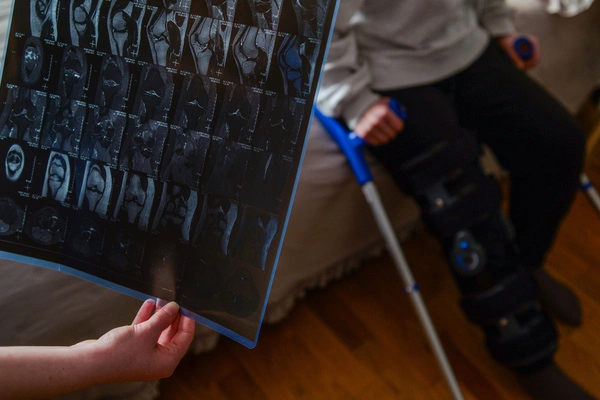
You’ll meet your dedicated orthopaedic knee surgeon and anaesthetist for a pre-assessment appointment. This may include x-rays and MRI scans of the affected knee. This is your opportunity to ask questions about your knee surgery and prepare yourself for the procedure, so fire away. Once the clinician has assessed you, you’ll be given a date for surgery.
Preparing for knee surgery
Preparation can help your recovery. Your team may recommend:
Strengthening exercises (often referred to as "prehab”)
Healthy diet and hydration
Home preparation (help at home, removing trip hazards)
Smoking cessation support (where relevant).
During the procedure
You’ll be given either a general or spinal anaesthesia. This will be discussed with you by your anaesthetist. During the surgery itself, the worn ends of the bones in your knee joint are removed and replaced with metal and plastic parts.
After surgery, you’ll be monitored in recovery while the anaesthetic wears off and your pain relief plan is established.
Immediately after surgery
At Practice Plus Group, we follow the Enhanced Recovery Pathway (ERP). This is a modern, evidence-based approach that helps people speed up their recovery following major surgery. The ERP champions the many advantages of day surgery knee replacement. With this support, you will be mobile enough to go home either on the day of surgery or soon after.
A few weeks after surgery, your doctor may suggest including exercises into your recovery. Cycling after a knee replacement is often recommended
Follow your doctor or physiotherapist’s exercises and advice
Don't:
Try to do too much too early
Participate in sports with a high risk of falling (i.e. football, rugby, mountain biking etc)
Drive straight after the operation. You won’t be able to drive until you can fully bend your knee
Knee surgery recovery timeline
The timeline below presents a step-by-step guide of what knee surgery patients can expect from their recovery. Please note, patients recover at different rates depending on a number of factors.
Week 1-2
Milestones: Return home (same day or after a short hospital stay). Patients should be able to bear weight on the affect knee, walking aids in use, wound care instructions provided, basic exercises started. Mobility: Dependent on crutches or frame. Driving: Not permitted. Pain: Often peaks day 2-3 then improves.
Weeks 3-6
Milestones: Reduced reliance on crutches. Patients should be able to bend the knee around 90°, incision site should have healed, resumption of light daily activities. Mobility: Walking independently or with a single stick. Driving: 4-6 weeks (must have control; check with car insurance provider). Return to work: Only if desk-based. Manual jobs can resume after 12 weeks.
Months 3-6
Milestones: Walking without aids, full extension of knee, return to swimming/cycling/golf. Mobility: Normal gait pattern returning. Pain: Mild or occasional only. Follow-up: Often 6 week and 6 month review (as advised).
Long-term recovery
Milestones: Full recovery can be expected between 12-18 months. Some patients may be able to return to low-impact sports. Implant longevity: Often 15-20 years (although this varies depending on the patient). Lifelong: Joint protection, exercise, monitoring.
Your knee surgery patient journey
Initial consultation – meet your consultant, discuss symptoms, examine the knee
Diagnostic imaging – X-ray and/or MRI where required
Follow-up appointments – progress review and rehabilitation milestones
Long-term review – ongoing support if symptoms persist or new issues arise
Private knee surgery costs in the UK
The cost of private knee surgery depends on a number of factors. These include the location of the hospital, the type of surgery, and the chosen healthcare provider. As a ballpark figure, you can expect to pay anything from £5,000-15,000 for your knee surgery.
The cost of knee surgery at Practice Plus Group
For knee replacement private surgery costs with Practice Plus Group, you can expect to pay £13,799, plus £145 for the initial consultation.
Healthcare provider
Consultation fee
Price of knee replacement surgery
Total cost
Practice Plus Group
£145
£13,799
£13,944
Nuffield Health
from £220
£16,820
£17,040
Spire Health
unknown
£16,021
from £16,021
Prices correct as at April 2024. Spire, Circle, and Nuffield hospital prices in the South West. If you are having an operation that requires an overnight stay and having a private room is important to you, please let us know when booking so we can do our best to accommodate. Find out more about the costs of private healthcare and why we charge less here.
What's included?
Our costs for private knee surgery include:
high-quality care
pre operative nurse review
prescriptions, dressings and equipment
anaesthetic
any overnight stay required
physiotherapy, pathology and histology needed whilst admitted
There are pros and cons to both of these options, so it's really down to the personal circumstances of the patient. For example, if they have the means to cover the operation, the patient will benefit from shorter waiting times than if they were to choose the NHS route.
Ways to pay
There are 3 ways to access knee surgery at Practice Plus Group:
At Practice Plus Group, you can choose an experienced consultant to support you throughout your time with us, ensuring you receive first-class, high quality care.
At Practice Plus Group Hospitals we’re passionate about giving patients a positive experience and excellent clinical outcomes, with personalised care every step of the way. Whether you’re paying for yourself or using private medical insurance, with our short waiting times, unrivalled Care Quality Commission (CQC) ratings and high levels of cleanliness and infection control, we’ll make sure you’re looked after. In fact, we were the first provider to have all services rated ‘Good’ or ‘Outstanding’ by the CQC.
This article was completed with the help of Mr Nurul Ahad, Medical Director and Orthopaedic Surgeon at Practice Plus Group. Mr Ahad graduated from Barts and the London School of Medicine before being appointed Trauma Consultant at Barking Havering and Redbridge University Hospitals in 2010. His expertise has led to several publications and international presentations.
With over 15 years of experience in orthopaedic surgery, he has a proven track record of delivering an excellent quality of service.
Over the last few years Practice Plus Group has grown its Marketing Team to include art workers, campaign and social media managers, content editors, and digital analysts. Together, they provide a responsive and comprehensive service, ensuring all content is on-brand and in-line with relevant medical guidelines.
Wellsoon is a service from Practice Plus Group that provides a range of treatments for patients paying for themselves or paying by private medical insurance. With no hidden costs, you'll pay less than you might think and be back to your best sooner than you thought.
Consultation within 1 to 2 weeks* - includes x-ray, bloods and swabs
Wellsoon is a private patient service from Practice Plus Group. Wellsoon offers fast access to high-quality treatment for patients who wish to pay for themselves, or access care via their private medical insurance. Wellsoon is available across all of our hospitals and surgical centres.

Knee replacement patient, Karen, tells of her 'life-changing' knee surgery at Practice Plus Group
Michael Flack talks about his hip replacement journey
Knee replacement patient testimonial, Plymouth, Emma Beadman
Jill Flack, tells us about her husband's hip replacement
Mel Baddick, knee replacement patient talks about her experience as a Wellsoon patient at our Plymouth hospital
Sue Bateman talks about accessing hip surgery with her private medical insurance
16
Knee surgery FAQs
What is the most common knee surgery?
In the UK, the most common knee surgery is knee replacement (usually to treat osteoarthritis). Other common knee procedures include knee arthroscopy (keyhole surgery to diagnose or treat joint issues), meniscus surgery (repair or trimming) and ACL reconstruction (to restore stability after ligament injury). The right option depends on your diagnosis, scan findings, symptoms, and activity level.
How can you get a knee replacement privately?
You can access a private knee replacement either by self-pay or through private medical insurance (subject to policy and authorisation). With Practice Plus Group, the next step is usually a £145 consultation within 1-2 weeks (includes x-ray, bloods and swabs), where a knee specialist will confirm the cause of your pain and recommend the most suitable treatment plan.
Many patients can be assessed and treated quickly through private healthcare. At Practice Plus Group, consultations are typically available within 1-2 weeks, and surgery may be available within 4-6 weeks, depending on the procedure and clinical suitability.
What is the cost of private knee surgery in the UK?
The cost of private knee surgery in the UK depends on the procedure, location, and whether an overnight stay is required. As a general guide, private knee surgery can range from around £5,000–£15,000 depending on treatment type. Practice Plus Group publishes location-by-location pricing, with knee replacement surgery priced at £13,799 plus a £145 consultation fee (prices correct as per your pricing section).
No. The operation itself isn’t painful as you’ll be under anaesthetic. Some pain and discomfort is likely in the hours and days after the operation. However this is usually managed with prescribed pain relief and exercise.
How do I prepare for knee surgery?
If you have a date for your knee surgery, you should start to prepare right away. Removing hazards from your home (loose rugs and cables) to prevent falling, placing items within reach, and clearing space for walking with crutches, are all good ideas for preparation.You might also consider strengthening and conditioning your body prior to surgery. Maintaining a healthy weight also reduces the amount of stress that will be put on the knee joint post-op.
How do I find private knee surgery near me?
The internet is a great resource here. It allows you to shop around and weigh up the pros and cons of different healthcare providers. We have 13 hospitals and treatment centres across the UK to choose from, so you can get treated close to home.
How long does it take to recover from knee replacement surgery?
Recovery varies by person, but many patients see a significant improvement around the 12 week mark. Full recovery can take longer — sometimes up to 12–18 months — particularly for building strength, stamina, and confidence in the joint. Physiotherapy and following your exercise plan are key to the best outcome.
When can I drive after knee surgery?
Driving is usually possible around 4-6 weeks after knee surgery, once you can safely control the vehicle and perform an emergency stop comfortably. This varies by procedure and recovery progress. Always follow your consultant’s advice and check with your car insurance provider.
What are the alternatives to knee replacement?
Depending on diagnosis and severity, non-surgical alternatives may include:
- Physiotherapy and strengthening - Weight management and activity modification - Pain relief or anti-inflammatory medication (where suitable) - Bracing or orthotics - Walking aids - Knee injections (e.g., steroid, hyaluronic acid, Arthrosamid, PRP where appropriate)
A knee specialist can explain which options are most likely to help in your case, and when surgery becomes the more effective choice.
Will I need physiotherapy after knee surgery?
Yes. Physiotherapy is a key part of recovery after most knee procedures, particularly knee replacement and ACL reconstruction. Your plan may include early mobilisation in hospital, a home exercise programme, and outpatient physiotherapy where needed.
Can I climb stairs after knee surgery?
Yes, most people can climb stairs again after knee surgery. You’ll usually start with physiotherapy guidance and may use walking aids early on. Your confidence and strength improve over time with rehabilitation.
Knee surgery Q&A with Trauma and Orthopaedic Surgeon, Mariusz Korycki
What are the benefits of knee surgery?
Is knee replacement a major operation?
How soon can I have knee surgery?
What happens after my operation?
How long does a knee operation take?
What should I do in recovery?
How active can I be after my knee operation?
How soon will I be able to drive?
How long will my knee replacement last?
19
Our hospitals
We have hospitals and surgical centres across the country. Find a hospital near you.
This was my 2nd time as an inpatient at Barlborough for knee replacement surgery and in my opinion you couldn’t have this surgery at a better place. It is truly outstanding.
by Joy Lesley Wright
Knee surgery, Plymouth – leading an active life once again
Thanks for performing total knee replacement on me. Due to your excellent skills I am improving daily and leading an active life once again!
by Chris Roberts
Knee replacement, Emersons Green – excellent care throughout
I had a uni-knee replacement operation on 20th February and six weeks later I am very pleased with it. I had excellent care throughout my stay and everything matched or exceeded my expectations. Although paying for it myself was daunting I am glad I had the op and the certainty of a set fee made it less worrying. I would recommend Practice Plus at Emersons Green to anyone else who can afford not to wait for an NHS operation.
by Amanda May, Google
Knee surgery, Emersons Green – friendly and highly professional
October 2020 I had total knee replacement, NHS referral. My experience was excellent…everyone was caring, listening and very professional.
by Anonymous
Fantastic care
I would recommend Practice Plus Group and would use them again if I need to. So, so grateful to all of them.
by Fran Taylor
Portsmouth – professional and kind
To all the medical team who looked after me. Thank you all so much for our professionalism and kindness. I thought the care you gave me was faultless and you made a stressful day almost enjoyable. Many thanks again, what a team!